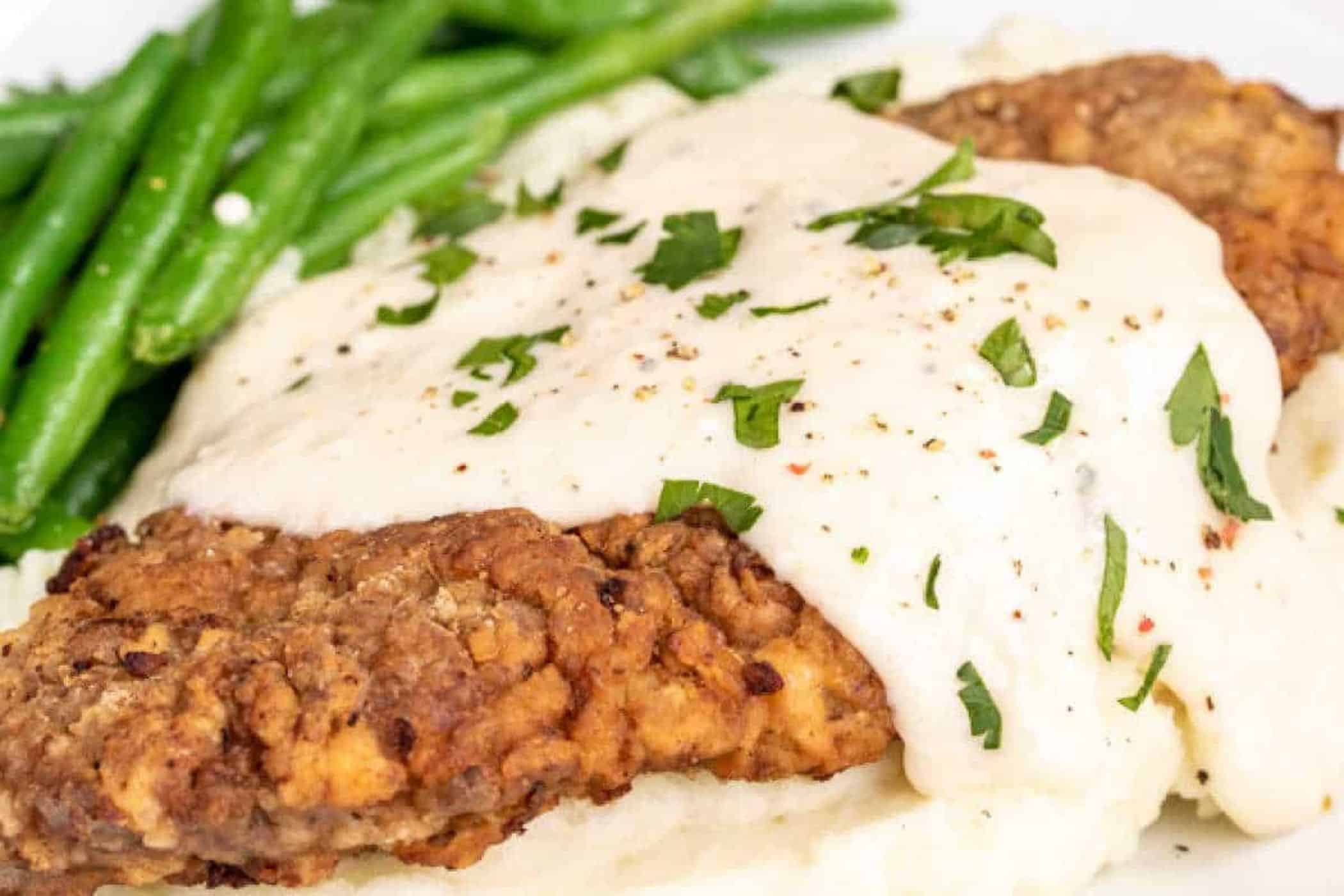


Smothered Beef Steak is the kind of comfort food dinner that makes everyone at the table smile. Everything happens in one pan, which means more browned bits, deeper flavor, and dinner on the table in under an hour. It’s simple, satisfying, and the kind of old‑school comfort food that never goes out of style.

SAVE THIS RECIPE!
Enter your email below and we’ll send this recipe straight to your inbox.
Why this Smothered Steak Recipe is a Keeper
This smothered beef steak dinner comes together in just 25 minutes, and it tastes like something that simmered all day. Here’s why you’ll keep coming back to it:
ONLY USE 2-4 OF THE MOST APPLICABLE FEATURES.
- Quick weeknight dinner: Ready in 25 minutes from start to finish — no long braise required.
- Rich, flavorful gravy: Butter, onions, garlic, beef stock, and heavy cream create a sauce that’s absolutely irresistible.
- One pan meal: Everything cooks in a single cast iron skillet, so cleanup is minimal.
- Easily doubled: Need to feed a crowd? Just scale the ingredients up proportionally.
- Serve with: I love to serve this smothered beef steak with Crock Pot Mashed Potatoes and my Rosemary Butter Rolls.
What Does Smothered Mean When it Comes to Steak?

Smothered is a classic Southern cooking term that simply means the meat is cooked and then completely covered — or smothered — in a rich gravy or sauce. In this recipe, the steaks are seared first to develop a deep, caramelized crust. Then they’re returned to the skillet and finished in a savory onion and cream gravy. Every bite of steak comes loaded with that luscious sauce, which is exactly what makes this dish so satisfying.
Pro Tip to Make Smothered Steak
Let the pan get fully hot before you add the steaks. A properly preheated cast iron skillet gives you that gorgeous sear that locks in flavor. If the pan isn’t hot enough, the steaks will steam instead of sear, and you’ll miss out on all those rich, caramelized drippings that make the gravy incredible.
Ingredient Notes for Steak and Gravy
You don’t need a long shopping list for this smothered beef steak recipe — just good ingredients used well. Here’s what to keep in mind:
This is an overview of key ingredients. Get the full printable recipe with specific measurements and directions in the recipe card below.

- Small steaks: We used small ribeyes for this recipe. Ribeyes are well-marbled and stay tender even over medium heat. Look for steaks that are similar in thickness so they cook evenly.
- Steak seasoning/Seasoning salt: Use your favorite steak seasoning or my homemade seasoning salt. It does all the flavor heavy lifting before the steak even hits the pan. It has onion powder and all the ingredients you need to enhance a juicy steak.
- Beef stock: Listed as ½ cup “as needed.” Keep it nearby while cooking the onions and use it to deglaze and prevent sticking. It also becomes the backbone of the gravy.
- Heavy cream: Just ¼ cup transforms the pan sauce into a velvety, restaurant-worthy gravy.
Variations and Substitutions for Smothered Steak and Gravy
Here are a few swaps you can make for this steak smothered in onion gravy. This easy comfort meal is easy to make swap outs.
➡️ Add mushrooms: Toss in sliced cremini or baby bella mushrooms with the onions for an earthy, hearty gravy.
➡️ Splash in wine: Add a splash of red wine to the pan after cooking the onions for a deeper, more complex sauce for the smothered beef steak.
➡️ Swap the cut of steak: Try this with another kind of steak such as cube steak, strip steak, or top sirloin steak if rib eye steak aren’t available or in budget.
➡️ Use a different stock for brown gravy: Chicken stock works in a pinch, though beef stock gives you the most robust flavor to this easy recipe for savory gravy.
➡️ Skip the cream: Leave out the heavy cream for a lighter, brothier pan sauce that’s still delicious.
Kitchen Tools To Make this Southern Comfort Food Easier
A cast iron skillet is the real MVP of this recipe. It holds heat evenly, builds a beautiful sear, and goes from stovetop to table beautifully.
- Cast iron skillet: The high heat retention gives you a better sear than most other pans. It also distributes heat evenly during the gravy simmer.
- Chef’s knife: A sharp knife makes quick work of dicing onions and slicing garlic.
- Cutting board: Keep a sturdy board nearby for all your prep work.
- Tongs: Much easier and safer than a fork for flipping steaks without piercing the meat.
How to Make Cast Iron Skillet Steak with Onion Gravy
Here’s a quick overview of how this recipe comes together:
These are just highlights. Get the full printable recipe with specific measurements and directions in the recipe card below.

- Season the steaks. Pat them dry and coat generously with steak seasoning.
- Sear the steaks. Cook in olive oil and butter over medium heat, 4–6 minutes per side.
- Rest the steaks. Remove the steak to a plate while you build the gravy.
- Make the onion gravy. Cook the onions and garlic in butter, then whisk beef stock and heavy cream until gravy thickens.
- Finish and serve. Return the steaks to the skillet for the final simmer, then serve smothered in gravy.

Prep Ahead and Short Cut Tips for Steak in Savory Onion Gravy
While the cast iron skillet is ideal for this recipe, you can also make it work with what you have.
➡️ Pre-dice the onions: Dice your onions and slice your garlic up to two days ahead and store in an airtight container in the fridge.
➡️ Season the steaks early: Pat the steaks dry and season them up to 24 hours in advance. Cover and refrigerate uncovered so the seasoning can work into the meat.
➡️ Use pre-made steak seasoning: A quality store-bought steak seasoning saves prep time without sacrificing flavor.
Alternate Cooking Methods – Slow Cooker Steak
While the cast iron skillet is ideal for this recipe, you can also make it work with what you have. It is a great way to make dinner ahead in the slow cooker or try:
- Stainless steel skillet: A heavy-bottomed stainless pan can replace the cast iron. Get it fully hot before adding the steaks for the best sear.
- Grill + stovetop combo: Grill your steaks outdoors for extra char, then make the onion gravy separately on the stovetop and pour it over at serving.
Can I Use A Different Cut Of Beef for this Smothered Beef Steak Skillet Recipe?
Absolutely. While small ribeyes are recommended for their marbling and tenderness, this recipe works well with several other cuts. Cube steak is a traditional choice for smothered dishes. Sirloin and strip steak are also great options. The key is making sure the steak is not too thick. Thinner cuts sear quickly and absorb more of that onion gravy flavor.

Store, Reheat and Use Tender Steak and Onion Gravy
- Storing: Store leftover smothered beef steak in an airtight container in the refrigerator for up to 3 days. Keep the steaks and gravy together so the meat stays flavorful.
- Reheating: Reheat gently in a skillet over low heat, adding a splash of beef stock if the gravy has thickened. You can also microwave in 30-second intervals, covered, until heated through.
- Using Leftovers: Slice leftover steak into steak bites and serve over mashed potatoes or egg noodles with the reheated gravy spooned over the top. It also makes a fantastic open-faced sandwich on toasted bread with gravy poured over everything.
Expert Tips for Making This Cast Iron Steak Recipe
This flavorful southern smothered steak is perfect to serve with rice or mashed potatoes
➡️ Dry the steak pieces thoroughly before seasoning. Patting the meat dry with paper towels removes surface moisture. That moisture is the enemy of a good sear — it creates steam instead of crust.
➡️ Don’t crowd the pan. Cook steaks with space between them, so use a large skillet. Crowding drops the pan temperature and prevents proper browning. Work in batches if needed.
➡️ Use those drippings. All those golden bits left in the pan after searing the steaks? That’s flavor. The onions, stock, and cream pull all of that into the gravy as they cook.
We Recommend You Try These


SAVE THIS RECIPE!
Enter your email below and we’ll send this recipe straight to your inbox.

Smothered Steak and Gravy
SAVE THIS RECIPE!
Ingredients
- 3-4 4 ounce Small Steaks, we used small ribeyes
- 2 teaspoon Steak Seasoning/Seasoning Salt
- 1 tablespoons Olive oil
- 3 tablespoons Butter
- 2 Small onions, diced
- 3 cloves Garlic, sliced
- ½ cup Beef stock, as needed
- ¼ cup Heavy cream
Instructions
- Pat the steaks dry with paper towel, then season with steak seasoning or seasoning salt.
- Place the olive oil and 2 Tablespoons of the butter in a skillet over medium heat and once hot, add the flour-coated steak.
- Cook the steaks for 4-6 minutes on each side, until they reach your desired level of doneness.
- Remove the steaks to a clean plate and add the remaining tablespoon of butter to the skillet.
- Once hot, add the onions and cook for 4-5 minutes, adding broth as needed to prevent them from burning.
- Add the garlic and cook for 1-2 minutes before adding the remaining beef stock and heavy cream.
- Bring the mixture to a boil, and then reduce to low heat to simmer for 3-4 minutes. Return the steaks to the skillet during this simmering period.
- Serve the steaks smothered in the onion gravy.
Christina’s Notes
- Start with dry steaks. Always pat them dry before seasoning. Surface moisture prevents browning. A proper dry surface means a better crust.
- Season generously. Steak seasoning needs to coat the surface fully. Don’t be shy — this is your only seasoning opportunity before cooking.
- Preheat your skillet. Give your cast iron 2–3 minutes to fully heat before adding oil and butter. A cold pan means a disappointing sear.
- Simmer the steaks in the gravy. That final 3–4 minute simmer with the steaks back in the pan is where the magic happens. The meat absorbs the sauce and the whole dish comes together.
- Tenderize for best results. A few quick hits with a meat mallet before seasoning helps break down the fibers and keeps the steak tender throughout cooking.
- Scale the recipe: Simply adjust the serving size in the recipe card and the ingredients will update automatically.
- Make your own All Purpose Seasoning: When a recipe calls for All Purpose Seasoning, you can use my homemade All Purpose Seasoning recipe or substitute salt and pepper to taste.
- Meat doneness: I always use a meat thermometer to test for doneness when cooking meat.
- Use unsalted butter: I use unsalted butter so I can control the salt level in the recipe.
- Preheat the oven: Unless otherwise noted, always preheat your oven before baking.
For more helpful information about this recipe, such as variations, substitutions and other pro-tips, check out the blog post.