
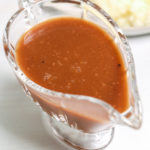
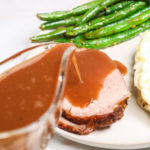
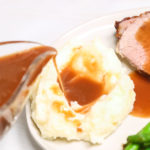


Homemade Brown Gravy has a rich flavor and goes great with everything from turkey and mashed potatoes to soups and stews. It’s a quick, easy recipe that adds warmth to all your favorite meals.
If you love this recipe, you’ll definitely want to try my gravy from ham or this easy pork gravy recipe.

SAVE THIS RECIPE!
Enter your email below and we’ll send this recipe straight to your inbox.
Why this Easy Homemade Brown Gravy Recipe is a Keeper
This delicious gravy is made from beef broth, which gives it a rich brown color. You don’t need any drippings to make this great recipe, so it keeps a smooth texture. The flavor of the gravy complements roast beef or turkey, as well as any of your other favorites. Brown gravy is easy to make and takes very little time. Here’s a few reasons why you’ll want to make this easy gravy recipe made with beef stock with no drippings required:
- Easy Ingredients: All of the ingredients for this brown homemade gravy can be found in your kitchen or local grocery store.
- Adaptable: Adjust the ingredients in this easy brown gravy recipe to your tastes and dietary needs or add herbs and vegetables.
- Versatile: This beef broth gravy goes great with meatloaf, pot roast, soups, pot pies, potatoes, and more.
What is a Roux?

A roux is a mixture of flour and butter or oil. It can be used to make up the base of stews, soups, gravies, and other condiments.
Best Beef Gravy Recipe Ingredient Notes
This brown gravy is the best for Thanksgiving and holiday meals, such as beef roasts. It’s made without drippings, but stock and red wine give it a dark brown color, along with flavor to the gravy. Here are a few things you’ll need for this homemade gravy recipe:

- Beef Broth: Make homemade gravy with beef stock or beef broth.
- Herb Butter: Use a storebought herb butter to thicken the gravy, or make your own.
See the recipe card below for a complete list of the ingredients with measurements.
Beef Gravy from Broth Prep Ahead Suggestions
- Freeze the roux: Freeze the roux for longer storage. Place it in an airtight container or freezer bag and freeze for up to 3 months.
- Make a large batch: Prepare a larger batch of brown gravy and store it in the refrigerator for up to 3 days. This is great for meal prep or busy weeknights.
Pro Tip to Make Gravy
The secret to a flavorful brown gravy is to use high-quality ingredients and cook the roux slowly until it’s deeply browned.
How to Make Brown Gravy from Scratch
Brown gravy is easier to make than white gravy. This recipe has no meat drippings needed, so it’s an especially simple gravy to make. Follow the recipe steps below to learn how to make this brown gravy without drippings.
These are the basic steps for making gravy from scratch. Refer to the full, printable recipe card below for detailed instructions.

1. Make Slurry for Gravy
First, melt herb butter in a saucepan. When butter is melted, whisk in flour until a paste forms. Whisk the flour paste for about 30 seconds.
2. Make the Gravy
Whisk in red wine, then broth and Worcestershire sauce. Continue whisking for about 3-5 minutes; the gravy will thicken.
3. Thicken Your Gravy
Season with all purpose seasoning, then simmer over medium heat to allow the gravy to thicken to desired consistency. Serve in a gravy boat.

How to Store, Reheat and Use Leftovers
- Storing: Store leftover gravy in the fridge in an airtight container.
- Reheating: Reheat on the stovetop or in the microwave until warmed through.
- Using Leftovers: Homemade gravy should last up to 3-4 days when stored correctly.
Easy Homemade Gravy Variations and Substitutions
- Pan Drippings: Make gravy from beef drippings for more flavor. You can also add beef bouillon or beef stock.
- Turkey Gravy: This brown gravy is made with beef broth, but you can use turkey broth instead. You can also try chicken stock or chicken broth.
- Mushroom Gravy: Add sauteed mushrooms to the gravy mixture. You can also add onions for onion gravy.
Best Gravy Recipe FAQs
Make roast turkey smothered in gravy. You can also serve it alongside cranberry sauce or crock pot mashed potatoes.
Merlot, Cabernet, or Pinot all work well.
Whisk the gravy frequently, or use an immersion blender to make the cooled gravy smoother. You can also use a strainer to strain out the lumps.

Expert Tips for Making The Gravy without Drippings Recipe
- Add Freshness: A sprinkle of fresh chopped rosemary, thyme or basil adds brightness to the gravy. You can also season with garlic powder or onion powder, or add salt and pepper.
- Veggies: Gravy made with sauteed mushrooms and onions can add another layer of flavor and interest.
- Variation tip: Non alcoholic cooking wines can also be used. If the gravy is too thick, thin it out with cold water.
- Gravy Packets: If you’re short on time, use gravy packets.
- Alternatives: Sodium free bone broth or bouillon can be used as well.

Homemade Brown Gravy
SAVE THIS RECIPE!
Ingredients
- 3 tablespoons Herb Butter
- 2 tablespoons Flour
- ½ cup Dry Red Wine
- 1 ½ cups Low Sodium Beef Broth
- 1 tablespoon Worcestershire Sauce
- All Purpose Seasoning, to taste
Instructions
- Melt herb butter in a sauce pan over medium heat.
- When butter is melted, whisk in flour until a paste forms.
- Whisk the flour paste for about 30 seconds.
- Slowly whisk in red wine and allow to reduce slightly.
- Whisk in broth and Worcestershire sauce.
- Whisk until sauce thickens, about 3-5 minutes.
- Taste and season to taste with House Seasoning Blend.
- Simmer over medium heat until gravy thickens to desired consistency.
Christina’s Notes
- Add Freshness: A sprinkle of fresh chopped rosemary, thyme or basil adds brightness to the gravy. You can also season with garlic powder or onion powder, or add salt and pepper.
- Veggies: Gravy made with sauteed mushrooms and onions can add another layer of flavor and interest.
- Variation tip: Non alcoholic cooking wines can also be used. If the gravy is too thick, thin it out with cold water.
- Gravy Packets: If you’re short on time, use gravy packets.
- Alternatives: Sodium free bone broth or bouillon can be used as well.
- Scale the recipe: Simply adjust the serving size in the recipe card and the ingredients will update automatically.
- Make your own All Purpose Seasoning: When a recipe calls for All Purpose Seasoning, you can use my homemade All Purpose Seasoning recipe or substitute salt and pepper to taste.
- Meat doneness: I always use a meat thermometer to test for doneness when cooking meat.
- Use unsalted butter: I use unsalted butter so I can control the salt level in the recipe.
- Preheat the oven: Unless otherwise noted, always preheat your oven before baking.
For more helpful information about this recipe, such as variations, substitutions and other pro-tips, check out the blog post.